How to Start a Personal Brand in 2026 (and Get Chosen for the Right Reasons)
Anonymous
March 2, 2026 · 9 min read
A personal brand is what people remember about you after a quick scroll, a short call, or one session together. It's the reason they trust you before they've even met you. In 2026, that trust matters more than ever because audiences are tired of generic, AI-sounding posts that say a lot but prove nothing.
People want receipts. They want personality. They want consistency.
That's especially true for headshots, portraits, and brand photos in New Jersey and Pennsylvania. Most clients don't pick the cheapest photographer. They pick the one they feel comfortable with, the one who seems calm, clear, and human.
This guide gives you a simple plan to start a personal brand in 2026, even if you're busy, camera shy, or not sure what makes you "different." You'll set a clear promise, build trust fast, post content that sounds like you, and turn attention into real bookings.
Start with a clear promise, who you help, what you help them do, and why you are the right fit
 Photo by Eva Bronzini
In 2026, "I'm a photographer" isn't a brand. It's a category. Your brand starts when you make a promise that's easy to repeat. Think of it like a label on a jar. If the label is fuzzy, people don't buy it.
A narrow focus helps because it makes your marketing simpler. It also makes trust faster. When someone in Philly needs a headshot for a job search, they don't want "everything photography." They want the person who does that job well, every week, with results.
Use this one-sentence personal brand statement template:
I help (specific people) get (specific result) through (your approach), so they can (why it matters).
Example (for a headshot photographer):
"I help job seekers get confident, natural headshots with calm coaching and clear prep, so they can show up strong on LinkedIn and in interviews."
You can support your promise with a few proof points. Keep them real, not fancy. If you want a good reminder of what "signature identity" looks like for photographers, this overview on photographer personal branding basics explains how message and visuals work together.
If your promise fits on one line, it can fit in a bio, a caption, and a referral text. That's the point.
Pick a focus that matches real life, not a trend
Trends can help, but they can also push you into a lane you can't sustain. Choose a focus based on work you already do, and results you can repeat. For photographers in NJ and PA, that often looks like:
Headshots for job seekers, branding portraits for small business owners, senior portraits, couples sessions, or even "camera-shy professional portraits."
Start where you have momentum. Maybe you've photographed five therapists in South Jersey, and each one said the same thing: "You made this easy." That's a lane. Meanwhile, you can still take other gigs. Your brand just needs a clear front door.
Also, give yourself room to shift. Your first focus is a starting point, not a life sentence. The goal is clarity for the next 6 to 12 months.
Write your "why people choose me" list (so your message is not generic)
If you sound like everyone else, people price-shop you. If you sound like a person, they start to picture working with you.
Write a quick "why people choose me" list. Pull from things clients actually care about:
- Comfort and coaching: You guide posing and expressions, especially for nervous clients.
- Fast turnaround: They get images quickly, with clear expectations.
- Natural editing: Skin looks real, not plastic.
- Clear pricing: No surprises, no awkward upsells.
- Studio vs on-location: You offer what fits their schedule and vibe.
- Local experience: You know NJ and PA locations, parking, and timing.
A fast exercise: ask three past clients, "What did you appreciate most about working with me?" Then copy their words into your notes. Don't rewrite them yet. Those phrases are your brand voice.
Build your home base and make it easy to trust you in under two minutes
 A simple portfolio setup that puts your work and contact path in one place, created with AI.
Social platforms still matter in 2026, but they're rented space. Feeds change. Reach drops. Accounts get copied. Your website and email list are the pieces you control.
The goal isn't to build everything at once. The goal is to make trust easy. When someone finds you, they should understand three things quickly: what you do, what it feels like to work with you, and how to take the next step.
This is where personal branding gets practical. You're not "building a vibe." You're removing friction.
Create a simple "brand hub" setup (website, email, and one main social platform)
Keep your minimum setup simple:
- A clean landing page that says who you help and what you offer
- A small portfolio with recent, relevant work (quality beats quantity)
- One clear contact or booking path
- An email capture that gives real value (example: "Headshot prep checklist")
For social, choose one main platform that fits visuals (often Instagram or YouTube). Then add a trust platform if it matches your audience. LinkedIn is great for headshots and business clients. Just don't overcommit. Consistency beats having five half-alive profiles.
If you want to see what's trending in business photography this year, this write-up on 2026 personal branding photography trends lines up with what clients are asking for: more real personality, less "perfect template."
Add trust signals that matter in 2026 (proof beats polish)
Polish still helps, but proof wins. Add trust signals that answer what clients are already thinking:
Share a pricing range (even if it's "most sessions start at…") because people hate guessing. Explain what a session feels like, especially if you coach posing and expressions. Add testimonials with specifics, not just "amazing!"
You can also show real examples: before-and-after expression changes, a small set from one session, or behind-the-scenes clips. A short FAQ helps too. Mention travel range, and be clear about your location in NJ or PA.
One detail matters a lot for local photography clients: who will actually show up. If you're Den Sweeney in Cherry Hill, NJ, say it plainly. Clients like knowing the same person they message will be the one behind the camera.
Create content that sounds like you, use AI as a helper, and show your process
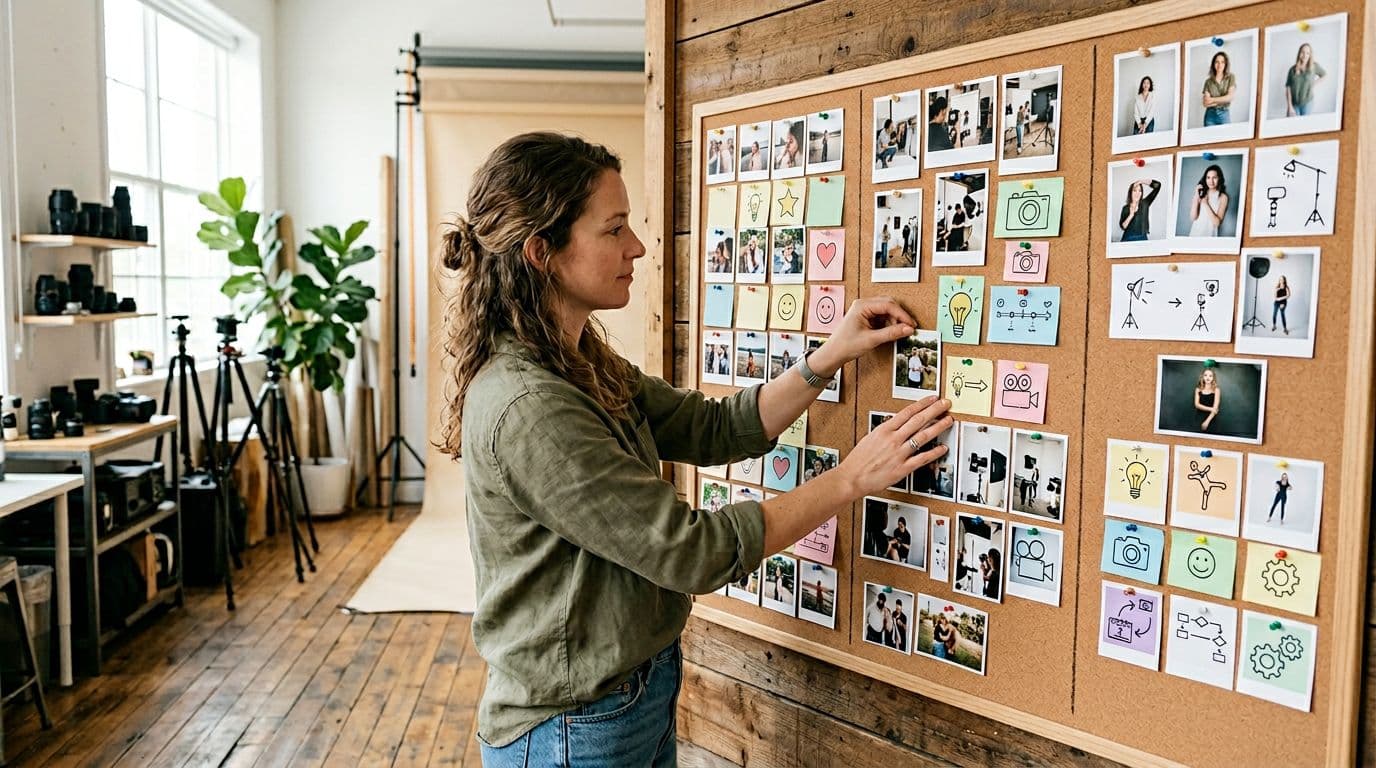 Planning content in simple buckets so posting stays consistent, created with AI.
In March 2026, audiences are reacting to the same thing: too many perfect posts that feel empty. That's why human stories stand out. "Emotion over perfect" shows up in photography trends right now, and it's not just a style choice. It's a trust choice. Even 2026 photography trend reporting highlights the shift toward authenticity and real moments.
So what should you post, and how often?
Start small, but stay steady. A realistic baseline for a busy photographer or service pro is 2 to 3 posts per week, plus one short video. If you can't do that, do one strong post weekly. Consistency builds memory.
Use a "3 bucket" content plan so you never wonder what to post
Use three buckets that match how people decide to book:
1) Proof (results)
Post recent work, client wins, and social proof.
Examples: a headshot set with context, a testimonial with a specific detail, a "new job, new headshot" story.
2) Process (what it's like)
Show how you get the result. This is where camera-shy clients relax.
Examples: a quick posing demo, a behind-the-scenes clip, a "what I say when someone feels awkward" post.
3) Guidance (helpful tips)
Teach the basics that clients worry about, like outfits and timing.
Examples: what to wear for a headshot, how to use headshots on LinkedIn, how to plan a branding session shot list.
This plan works because it matches real buyer questions: "Are you good?", "Will this be uncomfortable?", and "What do I need to do?"
Make video doable, even if you hate being on camera
You don't need to become a talking-head creator. Video can be quiet and simple.
Try low-pressure formats first: a screen recording of an edit (with no client names), a voiceover on a photo carousel, hands-only gear setup, or short behind-the-scenes clips. If you do talk on camera, keep it tight. One tip, one example, then done.
A realistic cadence that works for many NJ and PA photographers:
One strong short video per week, plus two photo posts. Then repost the same content across platforms, with small tweaks to the caption. You're not being repetitive, you're being findable.
For extra confidence, it helps to remember this: comfort isn't the entry fee. Comfort is the outcome. This guide on personal branding photography confidence explains that idea well, and it matches what most portrait clients experience.
Use AI for speed, but keep your voice and ethics
AI can save hours, especially when you're juggling sessions, edits, and life. Use it to support the work, not replace your point of view.
AI can help with outlines, caption drafts, hook ideas, keyword themes, repurposing, and proofreading. It should not replace your stories, your opinions, or client context. Also, don't use fake testimonials or fake portfolio images. That's not branding, it's a shortcut that breaks trust.
Use this quick "human check" before posting:
Add one personal detail, add one specific example, remove fluff, verify any claim.
If someone asks if you used AI, be honest. Most clients don't care about the tool. They care whether you're real.
For more ideas on where branding photography is heading this year, this roundup of 2026 branding photography trends reinforces the same theme: clients want images that look like a person, not a template.
Turn attention into bookings, relationships, and a brand that lasts
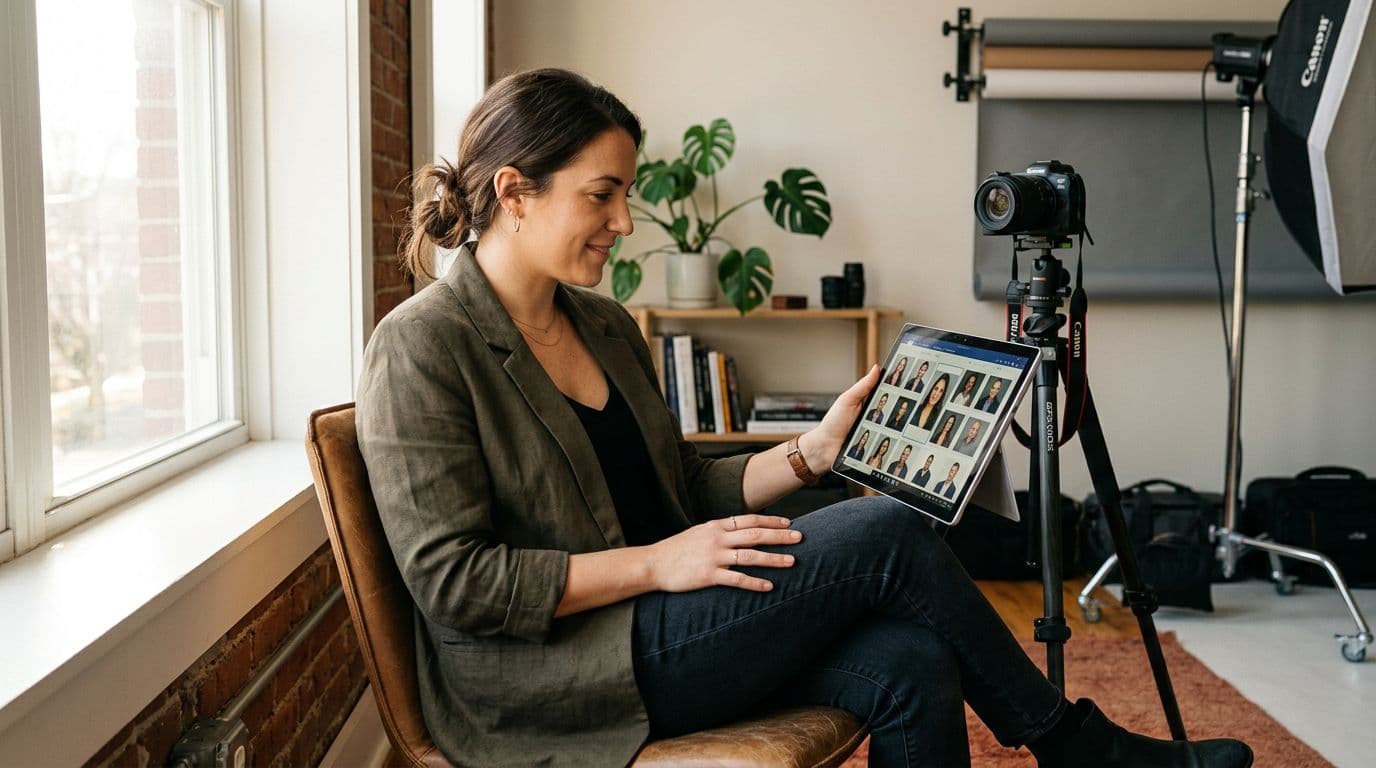 Reviewing client results and planning next steps, created with AI.
A personal brand isn't measured in likes. It's measured in replies, referrals, and repeat clients. If your content gets attention but doesn't lead anywhere, you're missing a clear next step.
For local services like headshots and portraits, relationships matter. People ask friends. They check reviews. They want to feel safe showing up.
So build a path that turns "looks great" into "how do I book?"
Ask for the next step every time (without sounding salesy)
Make your call to action feel like help, not pressure. Use one primary CTA per platform.
Examples that work well for photographers:
- "Send me your date and location, and I'll tell you what session fits."
- "Grab my headshot prep checklist, then reply with your job title."
- "DM me your industry, and I'll suggest a headshot style."
- "Book a 10-minute consult so we can plan your session."
Small CTAs work because they lower the stakes. Once someone takes one step, the next step feels easier.
Track what is working with a simple monthly review
Once a month, take 20 minutes and write down a few numbers and patterns:
Your best performing post, your most common DM question, number of inquiries, where leads came from, and what content felt easiest to make.
Then adjust. Do more of what brings the right clients. Drop what drains you and goes nowhere. Finally, refresh your one-sentence brand statement once a year. People grow, and your promise can sharpen with you.
Conclusion
Starting a personal brand in 2026 comes down to four moves: a clear promise, a stable home base, content that shows proof and process, and a simple path to book or connect. When you do those well, you don't need to act like a different person online. You just need to show up like the same person, on purpose.
Write your one-sentence brand statement today. Then post one piece of proof this week, a real session, a real result, or a real client win.
In NJ and PA photography, people book the photographer they trust, not the one who sounds the most "professional." Trust grows when you stay real and consistent, especially when someone feels nervous stepping in front of your camera.
Have Questions About Your Photography Needs?
Give Den a call to discuss your project
📞 Call 267-975-0020