Portrait and Headshot Sessions You Need for Your Personal Brand in 2026
Anonymous
March 2, 2026 · 10 min read
One headshot used to be enough. In 2026, it usually isn't.
Think about where your face shows up now: LinkedIn, your website, a speaking bio, a podcast guest page, a proposal PDF, even a Zoom thumbnail. Each space crops images differently and sets a different tone. If you use one photo everywhere, it can feel forced in at least a few places. Like wearing the same outfit to a wedding, a workout, and a job interview.
Modern headshots and portraits should feel real, not stiff. That means natural expression, comfortable posture, and retouching that stays light so you still look like you. People don't connect with plastic skin and frozen smiles. They connect with someone who looks present.
This post breaks down the exact portrait and headshot session types that cover most personal brand needs for professionals in New Jersey and Pennsylvania. Den Sweeney is based in Cherry Hill, NJ, and he personally photographs every session.
For a quick snapshot of what's changed recently, this 2026 modern headshot style guide lines up with what most clients ask for now: relaxed, current, and believable.
The core sessions that cover most personal brand needs
 Photo by Andrea Piacquadio
If you're trying to build trust, consistency matters. Not "matching outfits" consistency, but the feeling that your photos all belong to the same person, in the same season of life, with the same level of polish.
Most personal brands in NJ and PA can cover 90 percent of their needs with two session types:
- a clean, classic headshot session for all the tight crops and profile icons
- a personal branding portrait session for your website, content, and marketing
When you have both, you stop forcing one image to do ten jobs. Instead, you choose the right photo for the right moment, and everything looks intentional.
A strong photo library doesn't make you look "more corporate." It makes you look more consistent, which is what earns trust online.
The clean, classic headshot session (LinkedIn, email, and company profiles)
A headshot is a face-and-shoulders photo, usually on a simple background. It's built for tight crops, small circles, and quick recognition. If someone sees your name in an inbox or on a staff page, this is the photo that should match.
In 2026, the best headshots don't look like you're bracing for a passport photo. They look like you on a good day. Expect an authentic expression, relaxed shoulders, and a pose that feels natural instead of "posed."
Background choices have modernized, too. Charcoal, soft gray, and clean white are popular because they reproduce well across platforms. Subtle gradient backgrounds can also help your face stand out, especially when the image gets shrunk down on LinkedIn.
Retouching should be light. A good edit reduces distractions like temporary blemishes or under-eye shadows, but it keeps skin texture and smile lines. If you don't recognize yourself, the edit went too far.
Common uses for a classic headshot include LinkedIn, Teams or Zoom, email signatures, employee profile pages, conference speaker lineups, and press kits. If you work at a company with a public team page, consistent headshots also help the whole brand look organized. For a local example of how studios position cohesive staff imagery, see this page on professional headshots and branding in South Jersey.
 An example of a clean, modern headshot with a simple background and natural expression (created with AI).
The personal branding portrait session (your story, not just your face)
Branding portraits go wider than a headshot. You might shoot half-body or full-body, and you might use a real location instead of a plain background. The point is to show what it feels like to work with you.
These portraits are ideal when you need images for your homepage, About page, blog posts, social media, ad creative, and newsletters. They also help you avoid using random phone photos next to professional design, which can make a site feel uneven.
In the NJ and PA market, branding portraits tend to be especially useful for service-based professionals. Picture a realtor in the Philly suburbs who needs both "trust me" and "call me" energy. Or a therapist who wants to look warm and steady, not like a corporate stock photo. Coaches, attorneys, creatives, consultants, and small business owners all benefit because their brand is tied to their presence.
A good branding session can include location options (office, downtown street, studio, home workspace) and simple props that support your work. That could be a laptop, a notebook, a camera, a sketchbook, or a tablet. Props shouldn't scream "staged." They should look like something you'd actually touch in a normal day.
For another look at how personal branding photography is commonly framed in NJ, this personal branding photography page gives a helpful sense of what clients typically expect from a branding-focused set.
 A wider branding portrait that leaves room for website layouts and marketing copy (created with AI).
Add-on looks that make your photos feel current and usable everywhere
Once you have the core sessions covered, the most valuable upgrade is variety that still matches your brand. Not costume changes for the sake of it, but extra "looks" that solve real problems.
Here's the practical reason: different platforms need different shapes. LinkedIn wants a tight crop. A website banner might need negative space on one side. A podcast guest page might use a wide rectangle. If your session only creates one type of image, you'll end up cropping too aggressively or re-using the same photo until it feels tired.
In 2026, the trend is multi-use sessions with natural posing and minimal editing. People want images that feel like a real moment, even when they're planned. That's where lifestyle-style portraits and action details help.
You don't need 80 final images. You need a small set that works hard. For most professionals, aim for:
- 1 to 2 strong headshots (main and alternate)
- 3 to 5 branding portraits with different framing
- 5 to 10 lifestyle or action options for content and layouts
Lifestyle and "in the moment" portraits for websites and social content
Lifestyle portraits are the photos that feel candid, even though they're guided. Think walking, talking, laughing, looking off camera, working at a table, or taking a breath between "poses." They help viewers feel like they've met you.
That matters because personal brands don't run on perfection. They run on comfort and familiarity. A relaxed photo lowers the distance between you and a potential client.
Simple locations work best when they don't fight for attention. An office with clean lines, a downtown sidewalk with soft backgrounds, a coffee shop vibe without clutter, or an outdoor shaded spot all photograph well. In NJ and PA, tree-lined streets, modern building facades, and parks can look great as long as the background stays quiet.
A good lifestyle set also gives you "layout-friendly" images. If your website designer needs space for text, you'll be glad you have a wide shot with room on one side.
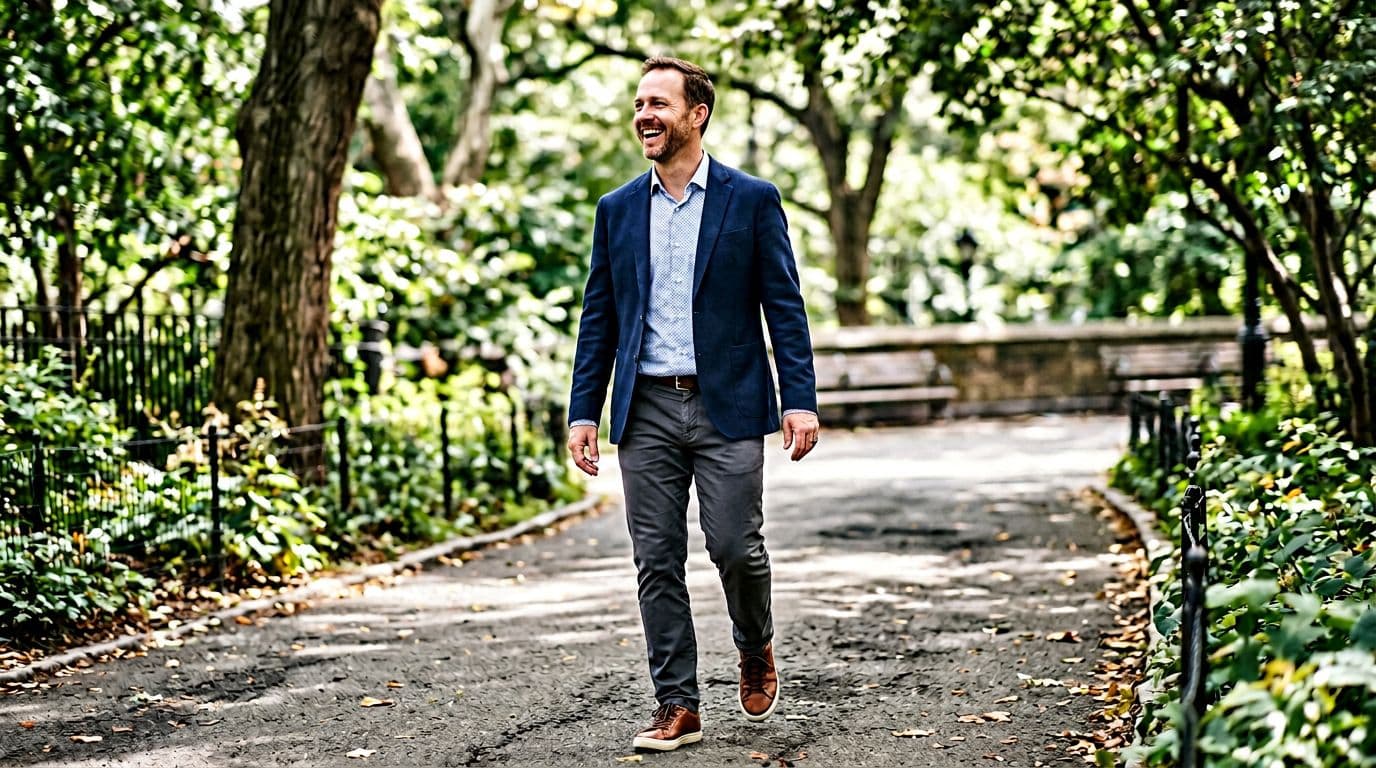 A candid-feeling portrait that works well for social posts and website sections (created with AI).
Action shots and detail photos that show what you actually do
Action images show you doing the work. That could mean consulting with a client, presenting, filming, writing, cutting hair, staging a home, reviewing documents, or leading a meeting. They don't need to feel like a documentary. They just need to look believable.
Detail photos are the quieter version of action shots. Hands on a keyboard, a notebook open on a desk, a microphone set-up, tools in use, a product in your hands. These images can carry a website section without always putting your face everywhere.
That's useful for banners, blog headers, social carousels, and ad backgrounds. It also helps when you want to post consistently but don't want every post to be a selfie in disguise.
If you want a broader definition of what portrait photography can include beyond head-and-shoulders, this overview of portrait photography explains how portrait work can range from classic to more creative, which is basically what action and detail shots do for a personal brand.
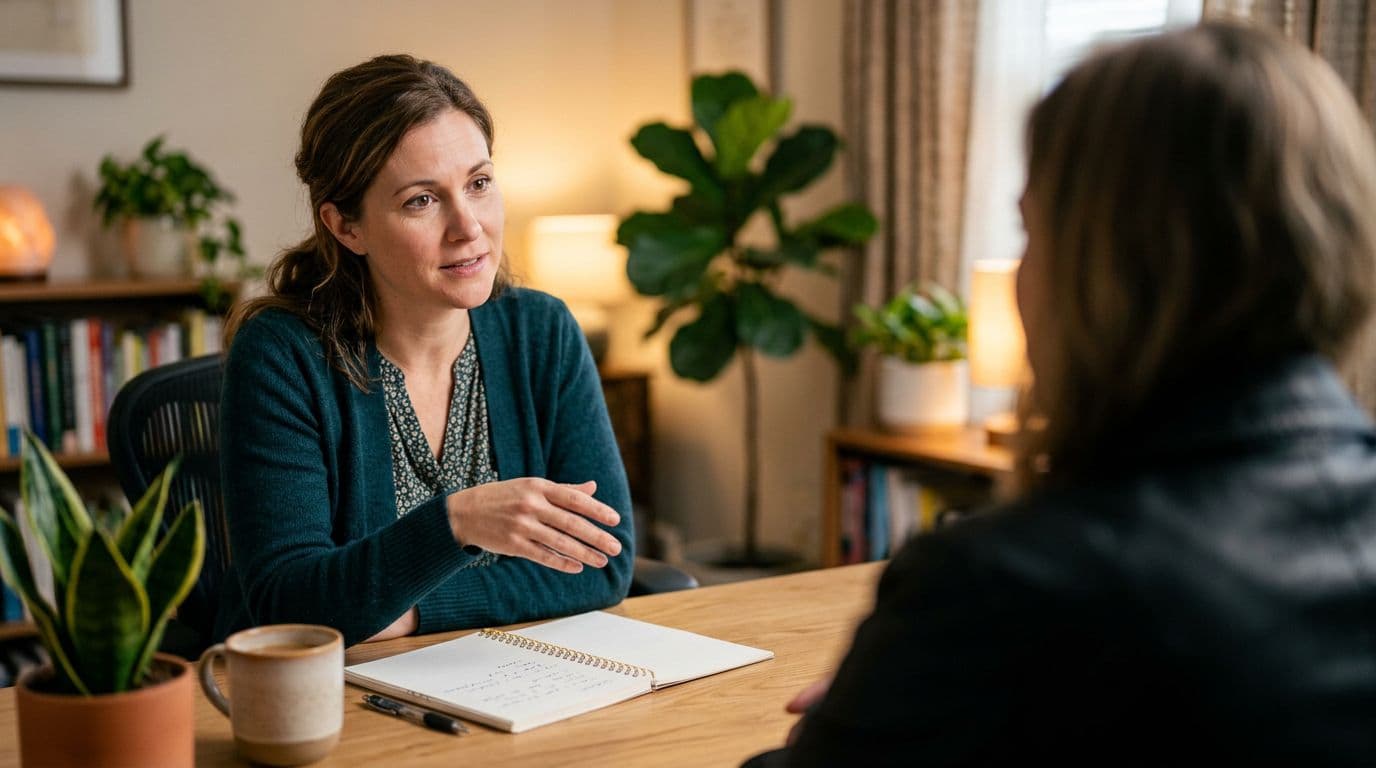 An action-oriented portrait that shows professional presence and real interaction (created with AI).
How to plan a session that matches your brand and feels like you
Planning is the part most people skip, and it shows. The good news is you don't need a complicated plan. You just need a simple one that matches your schedule and your real life.
Start by deciding what your photos must do in the next 6 to 12 months. Are you updating LinkedIn? Launching a new website? Pitching yourself for speaking gigs? Running ads? When you name the use, the shot choices become obvious.
Also, don't aim for a different personality on camera. Aim for a clear version of the real one. If you're naturally calm, your photos should feel calm. If you're upbeat and fast, let that show through movement and expression.
Den Sweeney photographs sessions himself, so you're not handed off to an associate. That helps the planning feel more personal, and it keeps the results consistent from start to finish.
Outfits, grooming, and simple prep that shows up well on camera
Wardrobe doesn't need to be complicated, but it does need to be deliberate. Camera lenses notice what your friends don't. Wrinkles show, logos date quickly, and busy patterns can distract.
Here's a simple prep list that works for most NJ and PA professionals:
- Choose solid colors: Jewel tones, navy, charcoal, cream, and earth tones usually photograph well.
- Avoid loud patterns and big logos: They pull attention away from your face, and they can age badly.
- Bring 2 to 3 outfits: One more formal, one business casual, and one that fits your day-to-day brand.
- Pick tailored fits: Slightly fitted looks cleaner on camera than baggy clothes.
- Steam or press everything: Wrinkles are hard to "fix later" without over-editing.
- Keep accessories simple: Small earrings, a watch, or one necklace is usually enough.
- Control shine: Blotting sheets or translucent powder help everyone, not just people who wear makeup.
- Groom with intent: Fresh haircuts help, but don't do a brand-new style the day before.
Minimal editing looks best when the basics are handled up front. That's how you get a natural finish without looking airbrushed.
Pick backgrounds, locations, and a shot list based on where you will use the photos
If you start with "What background do I like?" you might end up with photos that don't fit your platforms. Instead, start with usage, then build backward.
A LinkedIn photo needs a clean crop and a clear face. A website hero image needs space for text and a wider frame. Speaking bios often want a confident headshot with simple lighting. Podcast thumbnails are tiny, so your expression must read even when small.
A practical shot list doesn't need to be long, but it should be intentional:
- 1 main headshot (your default everywhere)
- 1 alternate headshot (different expression or background)
- 2 to 3 branding portraits (half-body and full-body options)
- 2 lifestyle options (walking, working, relaxed)
- 3 to 5 action or detail shots (for banners, posts, and headers)
Try to keep colors and mood consistent across looks. If your website uses warm neutrals, a neon background will feel off. When everything shares a similar tone, your brand looks organized without trying too hard.
For a good example of how photographers structure branding sessions with pre-planning and usage in mind, this personal branding session breakdown shows the kind of planning steps that often lead to stronger results.
Conclusion
A strong personal brand doesn't come from random photos collected over time. It comes from a small, smart set of session types that fit your real uses.
If you only need a better LinkedIn presence, book a clean, classic headshot. If you need a website plus marketing, add a personal branding portrait session. When you want a content library that lasts for months, include lifestyle and action details so you're not stuck re-posting the same image.
The goal is simple: look like yourself, just more consistent and current. That's what builds trust before you ever meet.
Den Sweeney is a Cherry Hill, NJ photographer, and he personally handles every session. If you're in NJ or PA and ready to update your headshots or portraits for your personal brand, book a portrait or headshot session and get images that actually fit how you show up in 2026.
Have Questions About Your Photography Needs?
Give Den a call to discuss your project
📞 Call 267-975-0020